
Last updated November 22, 2026
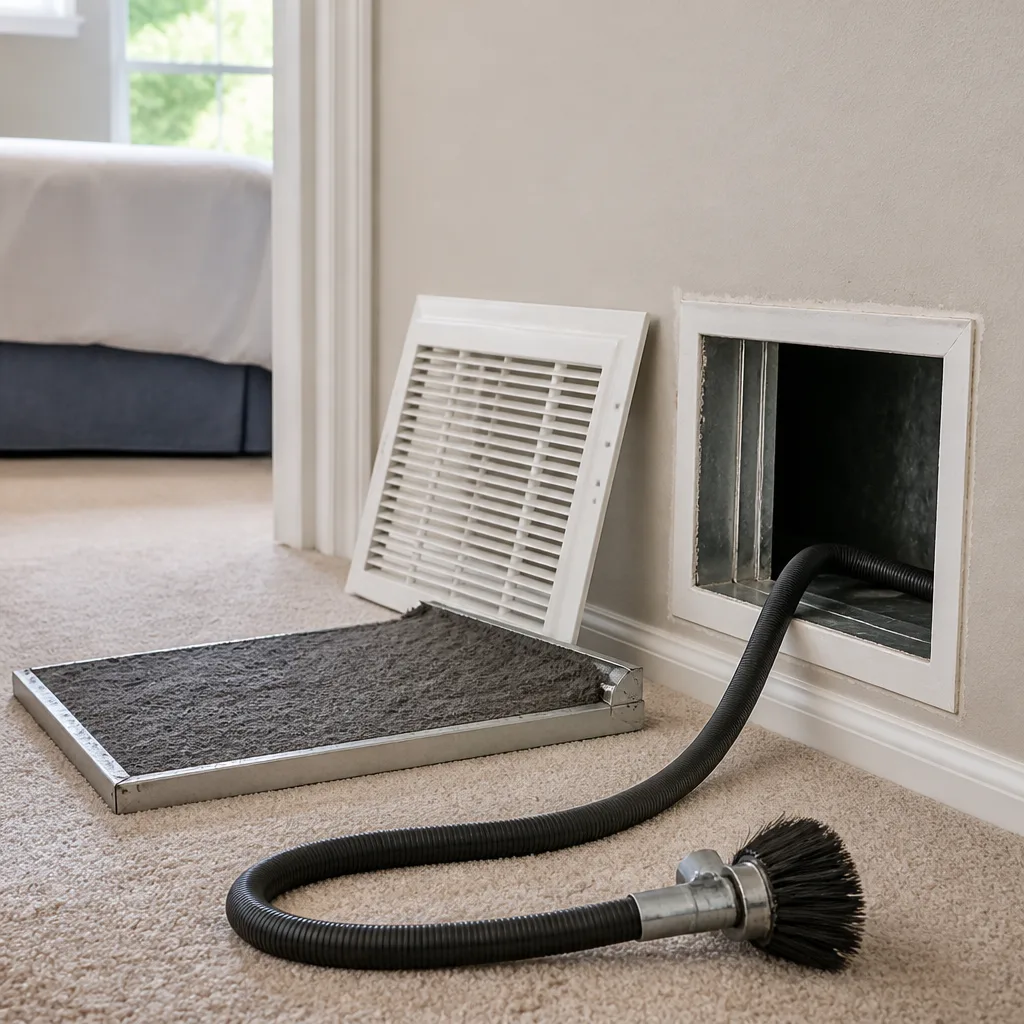 Whole-home duct cleaning
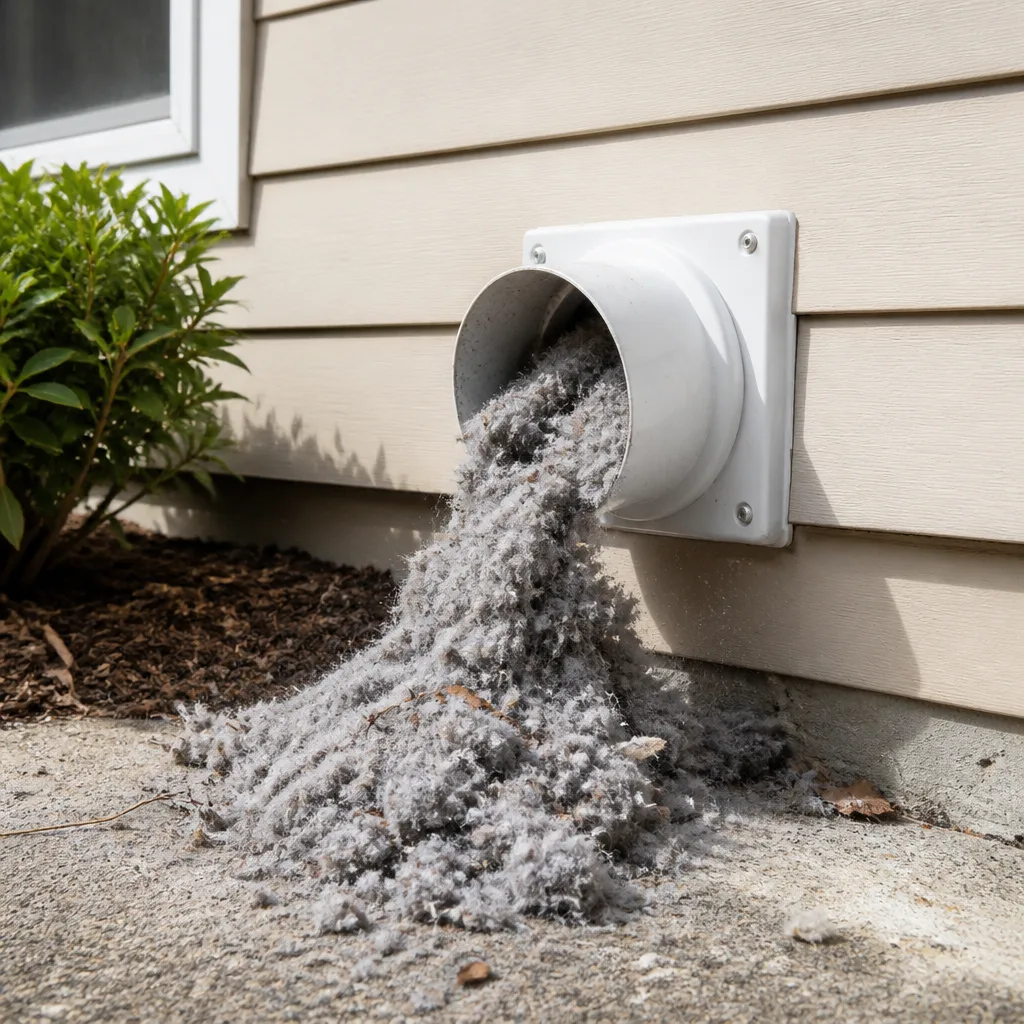 Dryer vent cleaning
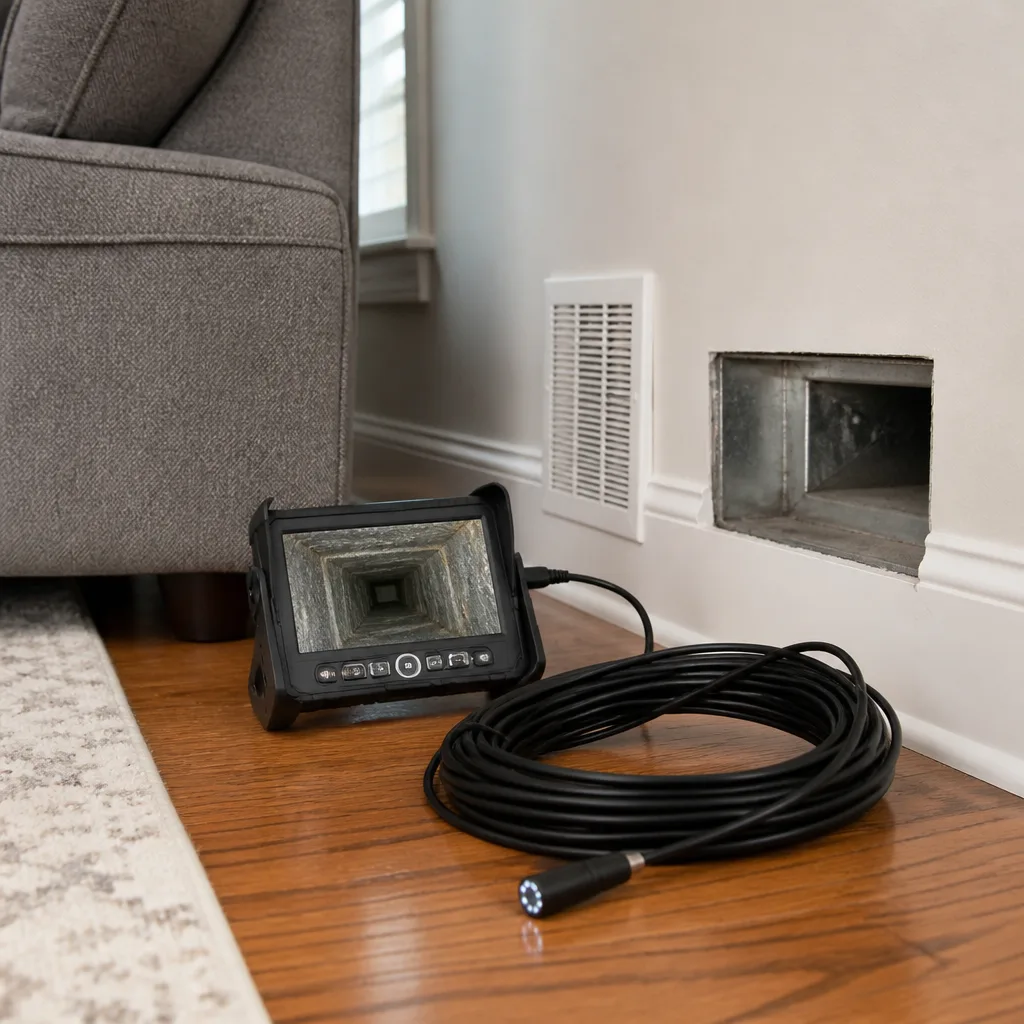 Camera inspection
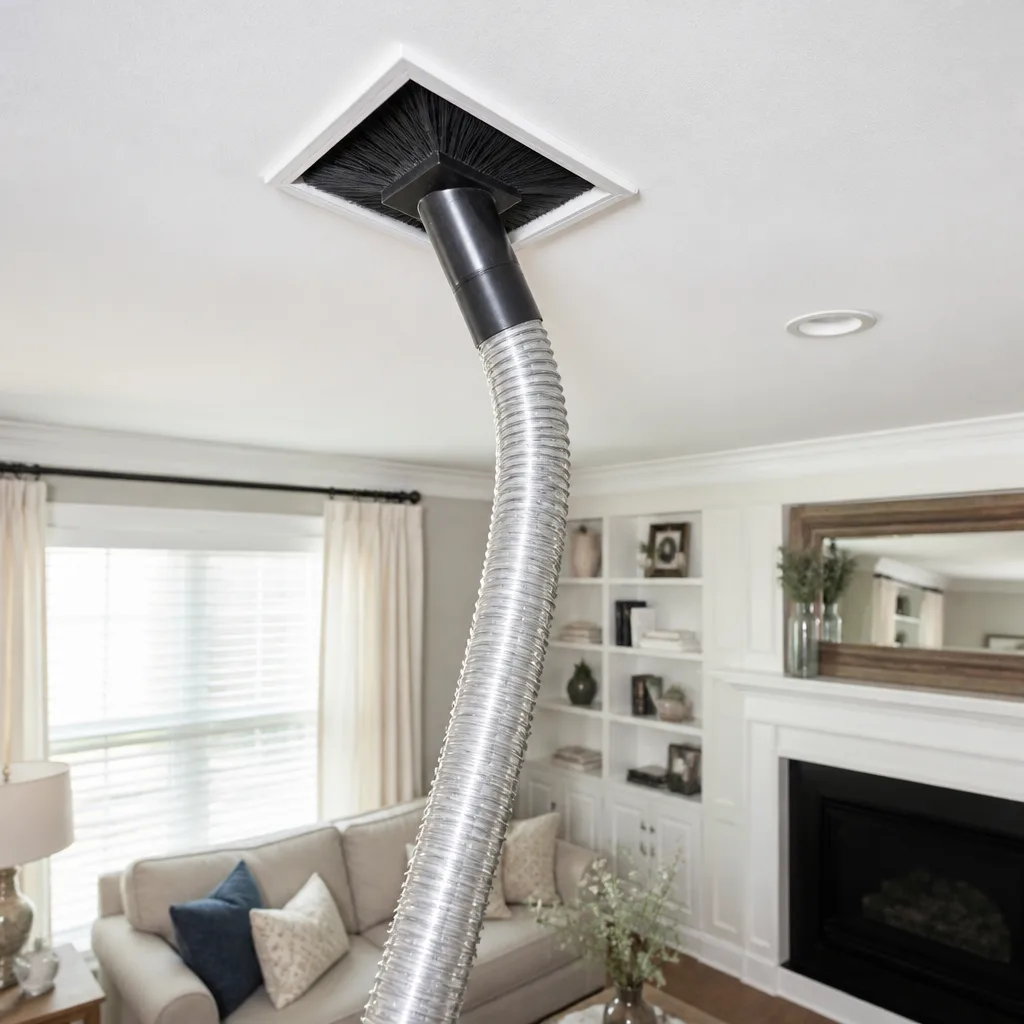 Sanitizing & deodorizing
Whole-system duct and dryer vent check with before-and-after photos - you see exactly what came out of your vents
That "$99 whole-house special" is a bait ad - the real number appears once they are in your hallway, or the "clean" is a shop-vac at the register. We photograph the inside of your ducts before and after instead.
DIY vs Professional Air Duct Cleaning: The Ridgewood Homeowner’s Decision Guide
Here’s the part most DIY tutorials leave out: a brush kit from a home improvement store and a shop vac can clean the first 18 inches of a duct opening. The other 85% of your duct system, the main trunk, and the air handler remain untouched, and that’s exactly where most contamination accumulates. In Ridgewood, where forced-air systems run hard through humid summers and cold winters, that overlooked stretch is doing a lot of quiet work. This guide draws a clear line between what you can genuinely accomplish with store-bought tools and what requires negative pressure and professional-grade agitation to actually move contamination out of the system.
Quick Answer
A shop vac and a consumer brush kit can clean the duct openings you can see, but they cannot reach the main trunk line, the air handler, or the interior of a typical Ridgewood forced-air system. Real cleaning depends on creating negative pressure across the whole duct run so loosened debris gets captured, not just stirred up. For anything beyond register and filter maintenance, professional equipment is the only method that removes contamination rather than redistributing it.
Styles & brands we work with
- Whole-home duct cleaning
- Dryer vent cleaning
- Camera inspection
- Sanitizing & deodorizing
Table of Contents
- What Consumer Brush Kits and Shop Vacs Can Actually Reach
- Why Negative Pressure Is the Whole Ballgame
- Tasks Homeowners Can Legitimately Handle
- When DIY Attempts Make Things Worse
- The Real Cost-Benefit Calculation
- How Ridgewood Homes Are Built to Fight You
- Professional Equipment vs Consumer Equipment: A Side-by-Side
- A Step-by-Step: What a Safe DIY Maintenance Routine Looks Like
What Consumer Brush Kits and Shop Vacs Can Actually Reach
Walk into any hardware store in Ridgewood and you’ll find a duct cleaning brush kit for less than the cost of a good dinner out. The kit comes with a flexible rod and a few brush heads. What it doesn’t come with is a way to reach past the first few feet of a register boot. In a typical forced-air home, the register boot is a short angled connector between the floor or wall vent and the branch duct. Past that, you’re into branch runs, a main trunk, and eventually the air handler.
The physics problem is straightforward. A consumer shop vac generates maybe five to ten inches of water lift, and only at the hose intake. That suction drops off almost immediately as the hose extends into a duct. By the time you’ve fed twenty feet of hose into a run, the airflow at the business end is negligible. The brush loosens dust, and the vac can’t lift it. So it settles back down, or gets pushed further along toward the air handler.
What you can reach with consumer tools:
- The register face and the first 12 to 18 inches of the register boot
- Flexible connections within arm’s length of an accessible opening
- Loose surface dust on the visible interior of a short run if you remove a register
- Filter faces and filter slots in the air handler cabinet
What you can’t reach, no matter how many brush extensions you buy:
- The main trunk line, which is often the largest diameter duct and holds the most settled debris
- The interior of the air handler, including the blower wheel, the evaporator coil, and the cabinet interior
- Return-side ductwork that runs through wall cavities or between floors
- Anything past a 90-degree elbow or a branch transition, where contamination likes to collect
If you’ve already paid for a store kit, use it for register cleaning and call it a day. That’s genuine value. Nobody should feel bad about cleaning a vent cover. The mistake is expecting the same tool to do the job that air duct cleaning actually requires, which is source removal across the whole system.
Why Negative Pressure Is the Whole Ballgame
Professional duct cleaning isn’t really about the brush. It’s about the pressure. A rotary brush, like a Rotobrush unit or a Nikro-driven agitation tool, does the mechanical work of loosening contamination from duct walls. But the reason that contamination leaves the house instead of landing on the floor or blowing back through the registers comes from negative pressure: a machine strong enough to hold the entire duct system under vacuum while the agitation happens.
Here’s how the sequence actually goes on a real job:
- A high-capacity negative-air machine is connected to the system, typically at the main trunk or at a cut-in point near the air handler.
- The system is sealed as needed so the machine pulls from inside the ducts rather than from the room.
- Access points are opened at strategic locations so the technician can agitate the duct interior.
- Rotary brushes and air whips break contamination loose from the walls.
- The negative-air machine captures that loosened material and moves it into a filtration or collection stage.
- Containment equipment (like the Abatement Technologies filtration units we carry) keeps fine particulate from escaping into living space during the work.
Notice what’s not on that list: opening a register and jamming a hose in. No consumer tool creates the pressure differential required for steps two through five, and no consumer shop vac can act as both a capture system and a source of sustained vacuum across a whole duct network. This is why we describe professional duct work as remediation-level care for residential air. The method is closer to restoration containment than to housekeeping.
If contamination is loosened without a capture system, it doesn’t disappear. It moves. It settles onto the nearest horizontal surface and into the next section of duct. That’s the outcome we most want Ridgewood homeowners to avoid, because the result can be a system that’s measurably dirtier at the far end than it was before you started.
Tasks Homeowners Can Legitimately Handle
Now the good news, because the honest answer is that there’s plenty of routine maintenance you should be doing yourself. These tasks are safe, useful, and they genuinely extend the interval between professional cleanings.
- Register cleaning. Pop off each supply and return register, wash it, dry it, and put it back. Home improvement stores in Ridgewood sell the right-size grill, and a bit of soapy water does the job. Do this once or twice a year.
- Filter changes. Check the filter monthly and replace it on the schedule the manufacturer specifies. This is the single highest-leverage thing you can do for indoor air and for system efficiency. A clogged filter chokes airflow and drives up energy use.
- Dryer lint trap maintenance. Empty the lint screen every load. That’s the one everybody does. Then go further: pull the dryer away from the wall once or twice a year and vacuum the area behind it, including the flexible connector.
- Exterior vent cap inspection. Walk outside and look at the dryer vent termination and the fresh-air intake caps. The flapper should move freely, and there should be no visible lint or debris. If the flapper is jammed or the cap is full of lint, that’s a call for dryer vent cleaning.
- Supply and return register airflow check. Hold a tissue to each register while the system runs. If the pull is weak at one register compared to others, note it. That’s useful information to pass along to a technician.
These five habits are the ones we’d tell any Ridgewood homeowner to master. They’re safe. They don’t require any special equipment. And they catch a lot of small problems before they become duct-level problems. What they don’t do is clean the inside of your duct system, and that’s a different category of work.
When DIY Attempts Make Things Worse
The risk in DIY duct cleaning isn’t just that it’s ineffective. It’s that it can leave your system in a worse state than it started, and sometimes in a way you won’t notice for months. In our experience these are the failure modes that actually happen:
- Dislodging settled debris without suction to capture it. You loosen decades of material from the walls of a run and it just sits in a pile further down. The next time air flows, it gets pushed toward the air handler or back out into a room.
- Damaging older flex duct connections. Flex duct is thin, and the inner liner tears easily. A brush rod jammed through a transition point can tear the liner at the collar or stress a taped connection until it leaks. Now you’ve got a duct that’s not just dirty, but losing air into a wall cavity.
- Spreading contamination to clean sections. Push a brush through a return line that hasn’t been cleaned and you can move dust into branch runs that were previously fine. Contamination doesn’t stay where you found it.
- Disturbing mold without containment. If there’s biological growth in the system (which is more common in humid basements and crawl spaces than most people realize) agitating it without containment sends spores into living space.
- Voiding HVAC warranty terms. Some equipment manufacturers specify that duct cleaning must be performed by a qualified contractor. A homeowner-caused issue during DIY duct work may not be covered.
- Electrical risk near the air handler. The air handler cabinet contains the blower motor and control board. Probing inside with a brush or a shop vac hose is a genuine electrical hazard, and it isn’t worth it.
We’ve seen Ridgewood systems where a homeowner’s attempt at cleaning a return line ended with a torn flex connection inside a finished wall. The repair cost more than the original cleaning would have. That’s the specific pattern we want to steer you away from: DIY cleaning of the ducts themselves is the wrong tool. Register and filter maintenance is the right one.
The Real Cost-Benefit Calculation
Let’s talk about what the price gap actually looks like, because the honest math favors professional cleaning more often than homeowners expect. This is not a small difference.
A consumer brush kit plus a decent shop vac runs a homeowner several hundred dollars at a big-box store in Ridgewood. Add in filters and the time spent learning the system, and the out-of-pocket cost is real. But the coverage is roughly the first 18 inches of each registered opening. The job that stays undone is the main trunk, the air handler cabinet, the return-side ductwork, and the branch runs past the first elbow. That’s most of the system.
Professional cleaning is priced per system, not per vent, and it covers the whole route. You’re paying for coverage, equipment, and the disposal of what comes out. And that last piece matters more than people credit it for, because professional equipment doesn’t just clean the ducts; it captures what it removes so you’re not breathing the debris back in during the work.
Here’s a fair way to think about the trade-off:
- DIY cost: brush kit + shop vac + your time + later correction if something is damaged
- DIY coverage: register faces, first 12 to 18 inches of each boot, visible short runs
- Professional cost: a per-system rate set by written estimate, agreed before work starts
- Professional coverage: supply and return ducts, main trunk, air handler, filtration path, plus any needed HVAC cleaning and duct repair or sealing in the same visit
The gap isn’t between cheap and expensive. It’s between doing 15% of the job yourself and doing 100% of it once. And if a DIY attempt damages a connection or spreads contamination into clean sections, the correction costs more than a proper cleaning would have from the start. That’s the calculation most homeowners get wrong before they buy the brush kit. If you’d rather get a written estimate and see the real number, we offer free estimates in Ridgewood.
How Ridgewood Homes Are Built to Fight You
Ridgewood housing stock is a big part of why consumer tools don’t go far. The neighborhood has a lot of pre-war and post-war homes, and many of those were built before ducted central air was common. When forced-air systems were added, they often went into the same small closets, attic spaces, and between-floor chases as the original heating equipment. The routing is often tight, and it often goes through finished spaces that you cannot easily get behind.
What that means in practice:
- Return-side runs frequently travel through wall cavities and between floors, where no interior access exists without cutting a hole. Consumer brushes are useless here. Professional work uses strategically placed access points that will be sealed afterward.
- Basement and crawl space ducts sit in humid conditions through the summer. That’s a common environment for biological growth, and it means condensation on cool ducts during peak humidity isn’t unusual. If you’re seeing musty odors through the registers, that’s a signal for professional assessment, not more shop vac time.
- Many homes have flex duct in attic and crawl runs because it’s faster to install. Flex duct’s ribbed interior catches dust at every corrugation, and its inner liner is easy to tear. Gentle professional agitation works. A homeowner pushing a brush rod through it usually doesn’t.
- Seasonal dust load is real. Winter heating season and summer cooling both run the system hard. That’s why the interval between cleanings is often shorter in Ridgewood than in more temperate climates.
If you have a pre-war home and don’t know the last time the ducts were cleaned, the answer is almost always “not recently.” The other piece of Ridgewood context worth knowing: many systems also have duct leaks that are invisible until someone looks for them. That’s why we treat duct repair and sealing as a native part of the work rather than a referral. The right visit leaves you sealed and cleaned, not just one or the other. For a broader look at our work across the neighborhood, see Ridgewood Air Duct Cleaning.
Professional Equipment vs Consumer Equipment: A Side-by-Side
The equipment difference is the reason the coverage difference exists. Consumer tools and professional tools look superficially similar (both are vacuums with brushes attached) but they solve different problems.
- Rotobrush rotary brush systems: designed specifically for interior duct cleaning, with mechanical agitation and controlled forward movement through branch and trunk runs. The brush heads are sized and shaped to work inside standard residential duct dimensions. A consumer brush kit mimics the look but not the reach.
- Nikro negative-air machines: industrial vacuum capacity sized for whole-system pressure differential. These are what hold the entire duct run under negative pressure so loosened contamination moves toward collection rather than into the room.
- Abatement Technologies filtration: remediation-grade capture equipment. This is the tool tier shared with water damage restoration and mold remediation crews. It matters most when there’s mold, post-renovation dust from drywall work, or significant allergen load.
- Honeywell and Aprilaire product integration: beyond cleaning, these are the filtration and humidity-control brands we can recommend and service to address the conditions that build up in Ridgewood’s humid summers.
- Guardsman material coverage: relevant when surface protection or treatment is part of the work.
Our technicians have up to 10 years of experience working with this equipment tier, and we use it because the alternative doesn’t finish the job. The line between consumer tools and professional tools is easy to see once you understand what each one is designed to do. Full-system cleaning is the standard we work to, and it covers the duct openings through the air handler to the filtration path and the dryer vent as well. That’s why we run all five service categories, air duct cleaning, dryer vent cleaning, HVAC cleaning, duct repair and sealing, and air quality sanitizing, under one umbrella. The homeowner doesn’t have to coordinate multiple vendors to get the whole system addressed.
A Step-by-Step: What a Safe DIY Maintenance Routine Looks Like
Here’s a routine you can run yourself, safely, between professional cleanings. It’s not duct cleaning. It’s maintenance that supports the interval between cleanings, and it’s the piece of the job that belongs in a homeowner’s hands.
- Turn off the system at the thermostat and the breaker before touching any register or filter. This is non-negotiable. The blower can start unexpectedly, and there’s real electrical risk around the air handler cabinet.
- Replace or clean the air filter. Check the manufacturer’s recommendation for the right replacement. A clogged filter strains the system and reduces indoor air quality.
- Remove and wash the supply and return registers. Soapy water and a soft brush. Dry completely before reinstalling.
- Vacuum the visible dust in the register boot with the shop vac. Stop at the point where the boot meets the branch duct. Don’t shove a brush past that point.
- Check the exterior vent caps. The dryer vent flapper should swing freely, and the cap shouldn’t be full of lint. The combustion-air and fresh-air caps should be clear too.
- Pull the dryer out and vacuum behind it and around the flexible connector. Just the visible area. Don’t disassemble the connector yourself.
- Note any symptoms: weak airflow at a register, musty odor, visible dust streaks around a register, or excess dust settling on surfaces. These are the signals that move the next cleaning forward on the calendar.
That routine is worth doing once a year or so. It’s safe, and it keeps the easy parts of the system clear. What it doesn’t do is reach past the boot, into the branch and trunk ductwork, or into the air handler. Those are the parts of the system that hold the majority of the contamination, and they’re the parts that require source-removal equipment with negative pressure to clean properly.
Common Mistakes to Avoid
- Assuming “dusty registers” means DIY is enough. Register dust is the visible 15%. The other 85% is what you can’t see, and the register being dusty usually means the branch and trunk are too.
- Buying a brush kit and expecting full-system results. A brush kit reaches about 18 inches into each duct opening. The rest of the run stays untouched, and that’s where contamination collects.
- Using a shop vac as a duct-cleaning machine. A shop vac can’t produce the sustained negative pressure needed across a whole system. It’ll pick up the surface dust you can see and stir the rest into the air.
- Running a brush through old flex duct. Flex duct liners tear easily, and a torn liner inside a finished wall is a repair, not a maintenance item. If you don’t know what’s behind the register, don’t force a brush through it.
- Ignoring the air handler cabinet. The blower wheel and evaporator coil are where a lot of the dirt actually lives. They’re also where the electrical components are. Leave that cabinet to a technician.
- Forgetting the dryer vent entirely. Lint buildup in a dryer vent is a documented fire risk, and a DIY lint-trap habit doesn’t address the run behind the dryer or through the wall. It’s a separate service and it deserves the same attention as the air ducts.
- Skipping the filter check for months. The most common efficiency complaint we hear from Ridgewood homeowners traces back to a filter that should have been replaced a month ago. Check it monthly.
See the difference
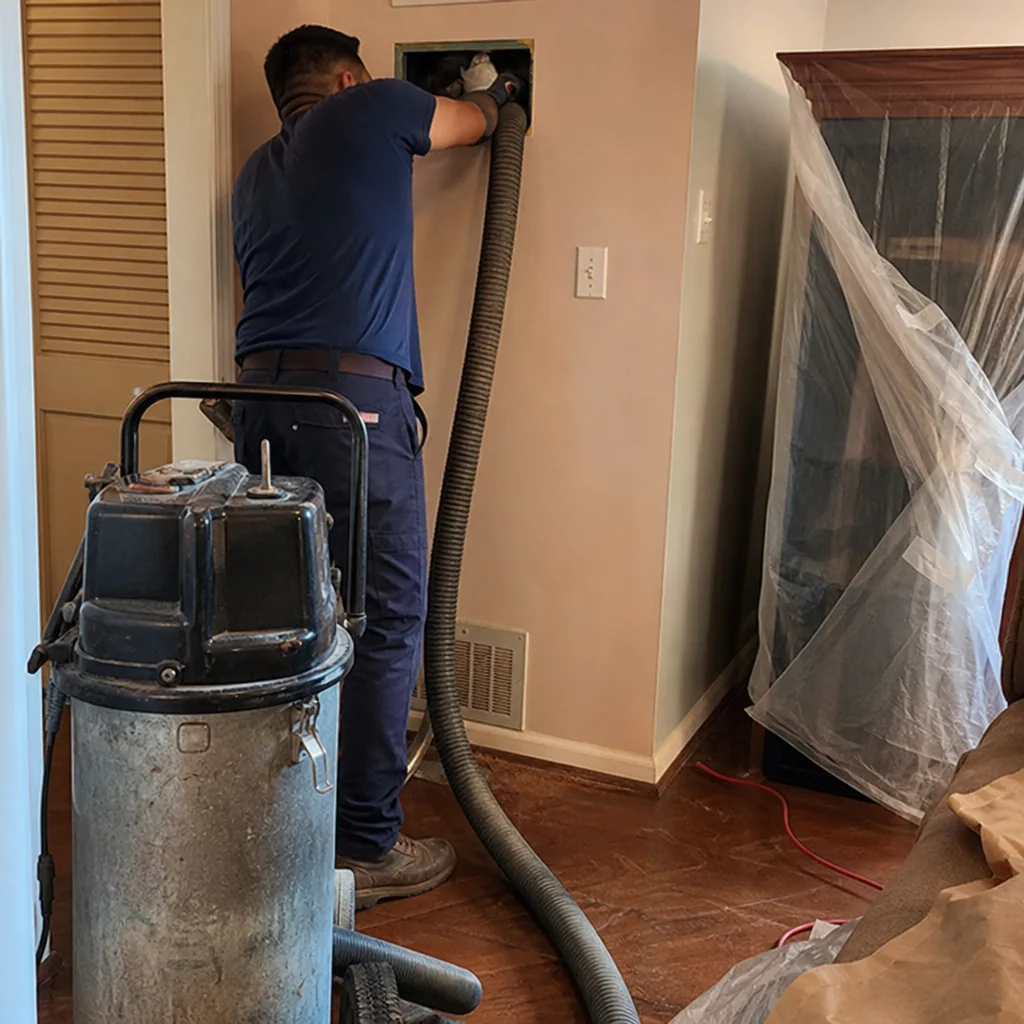 Before
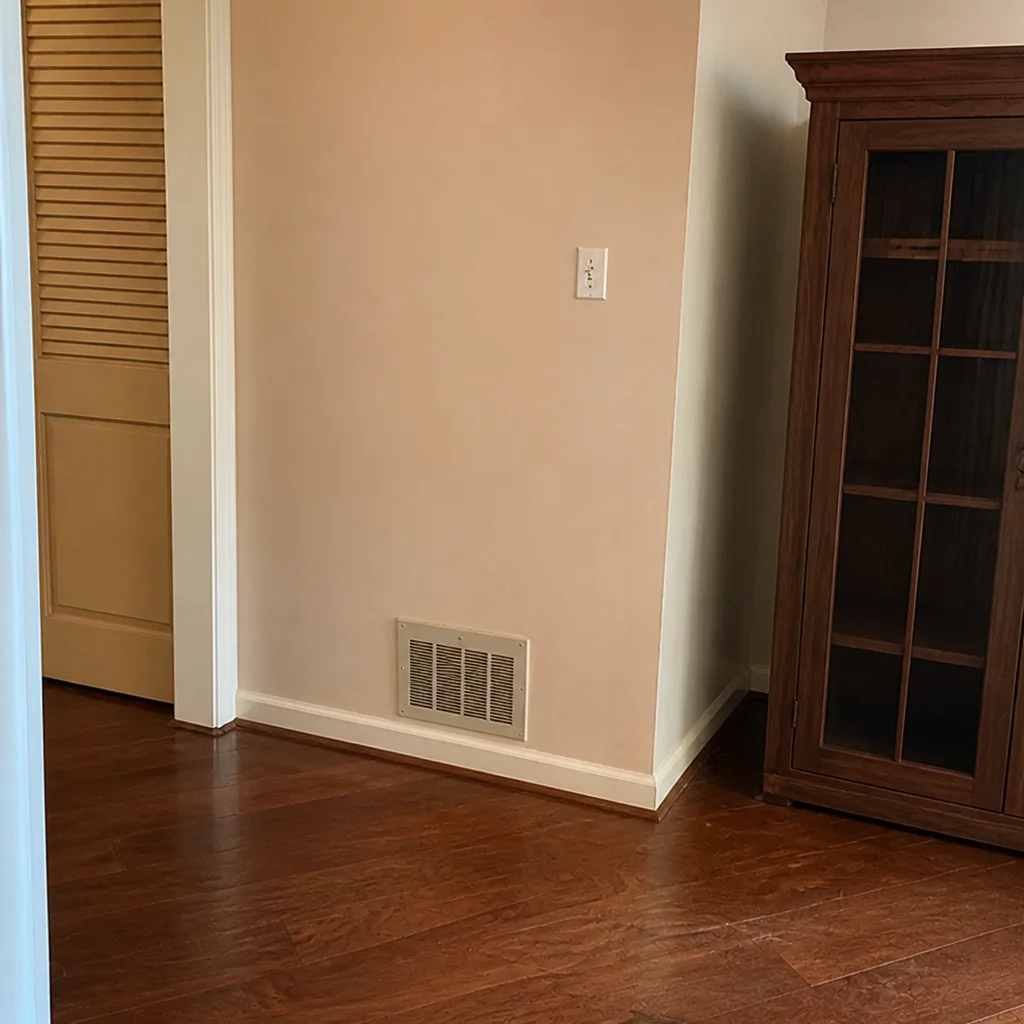 After
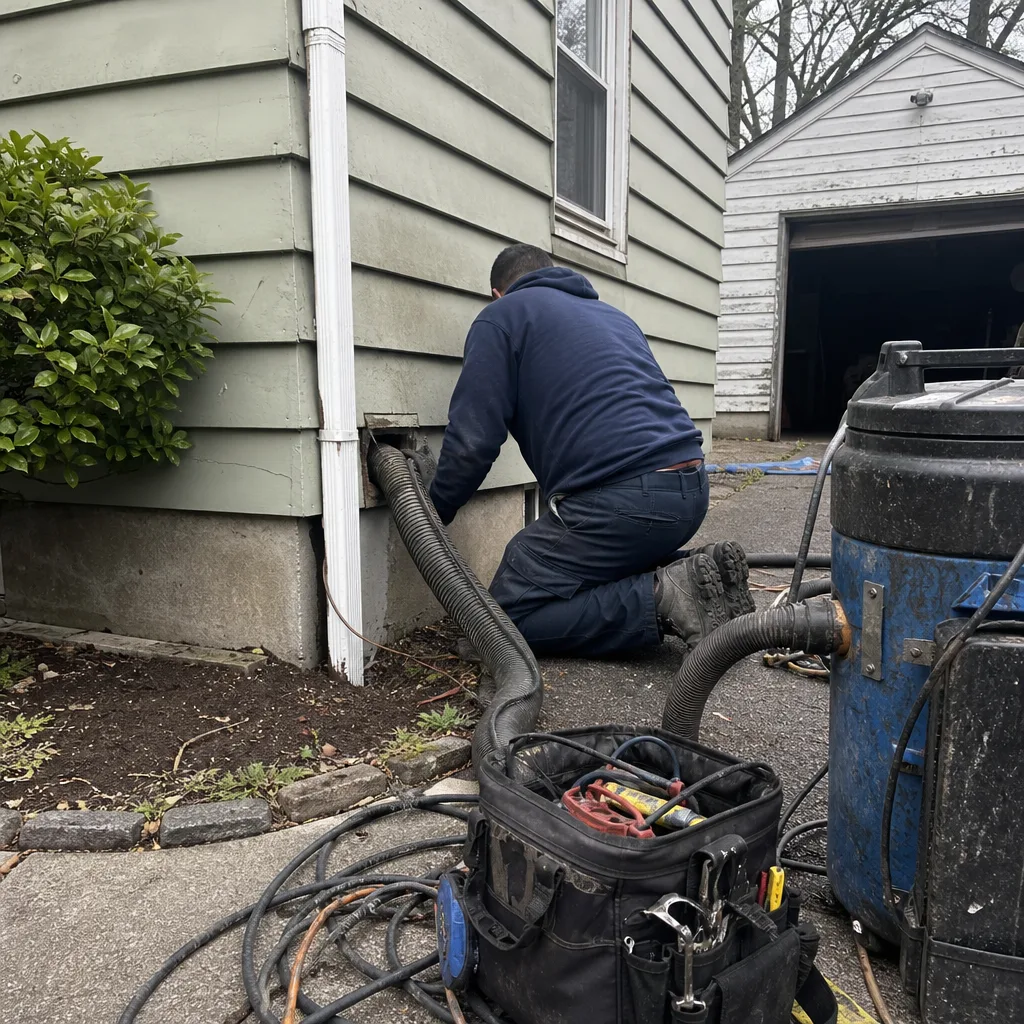 Before
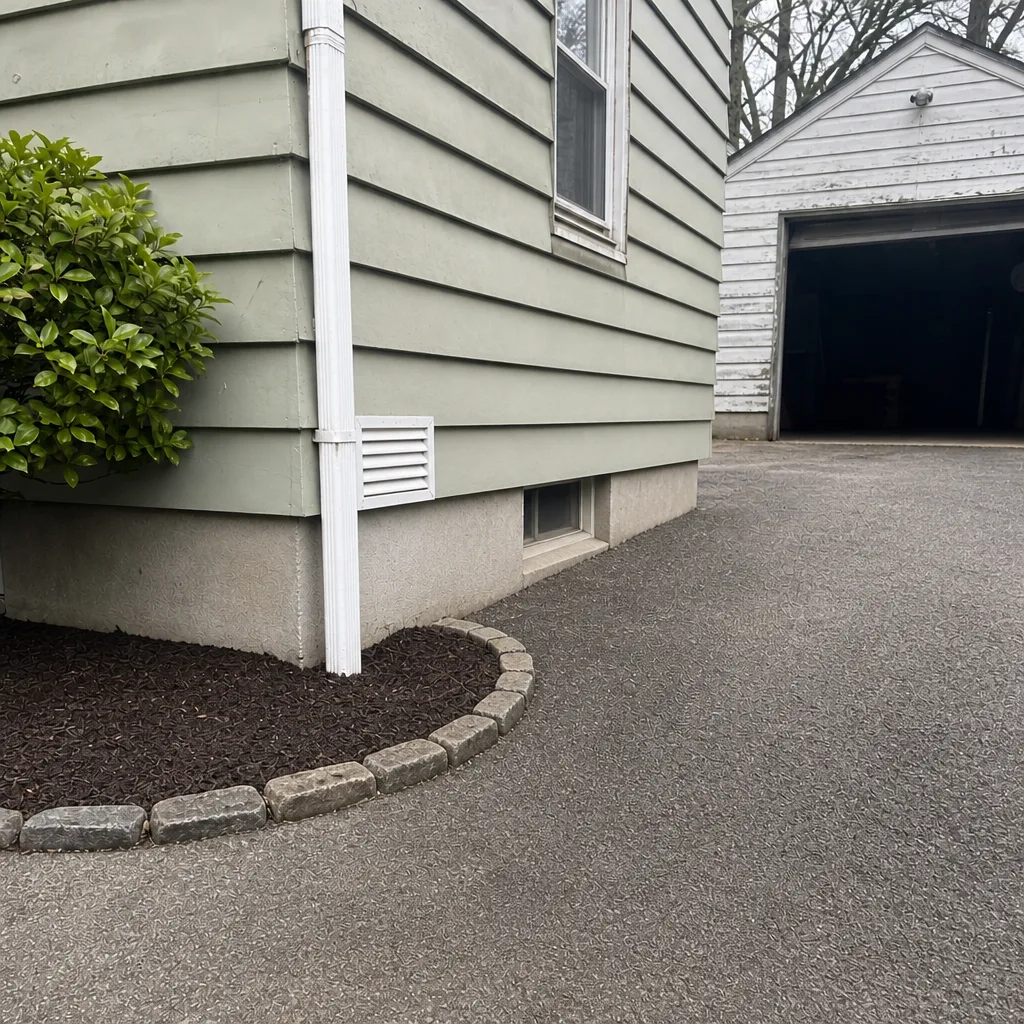 After
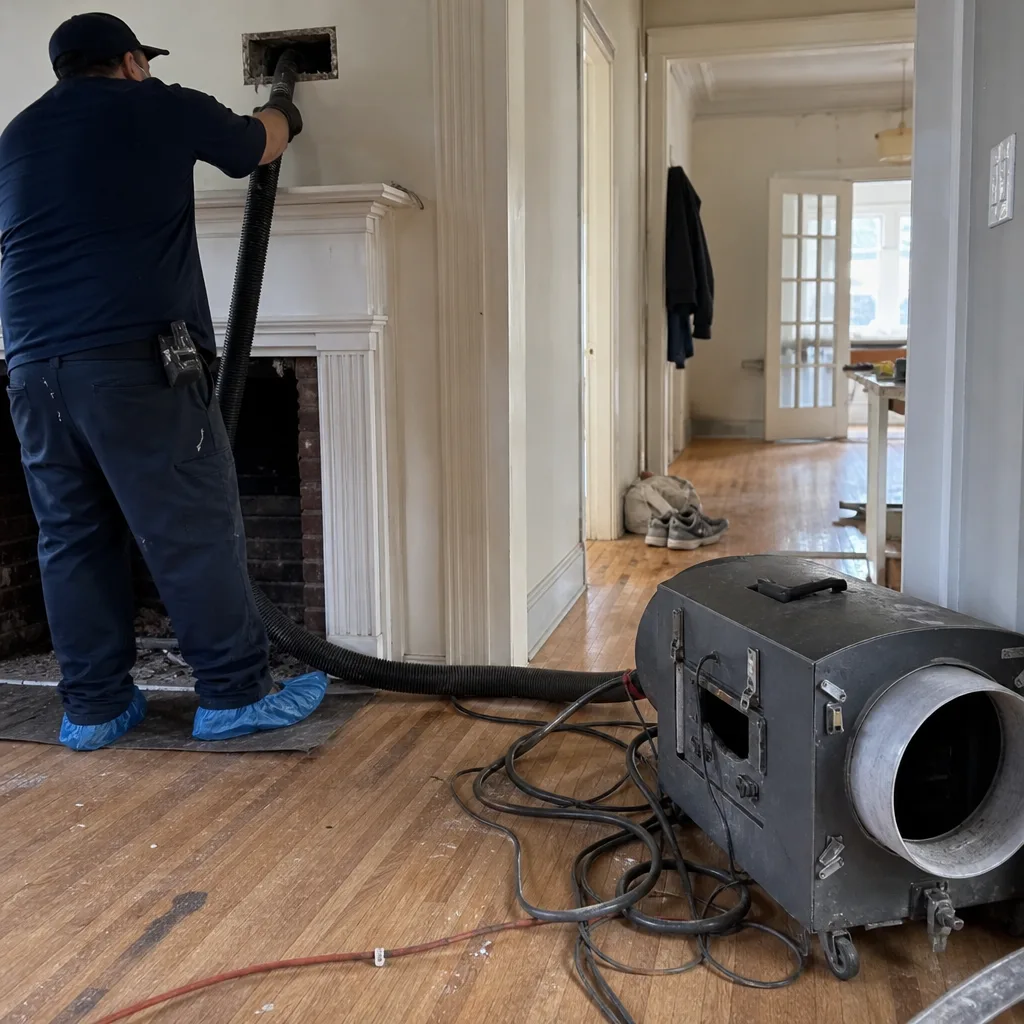 Before
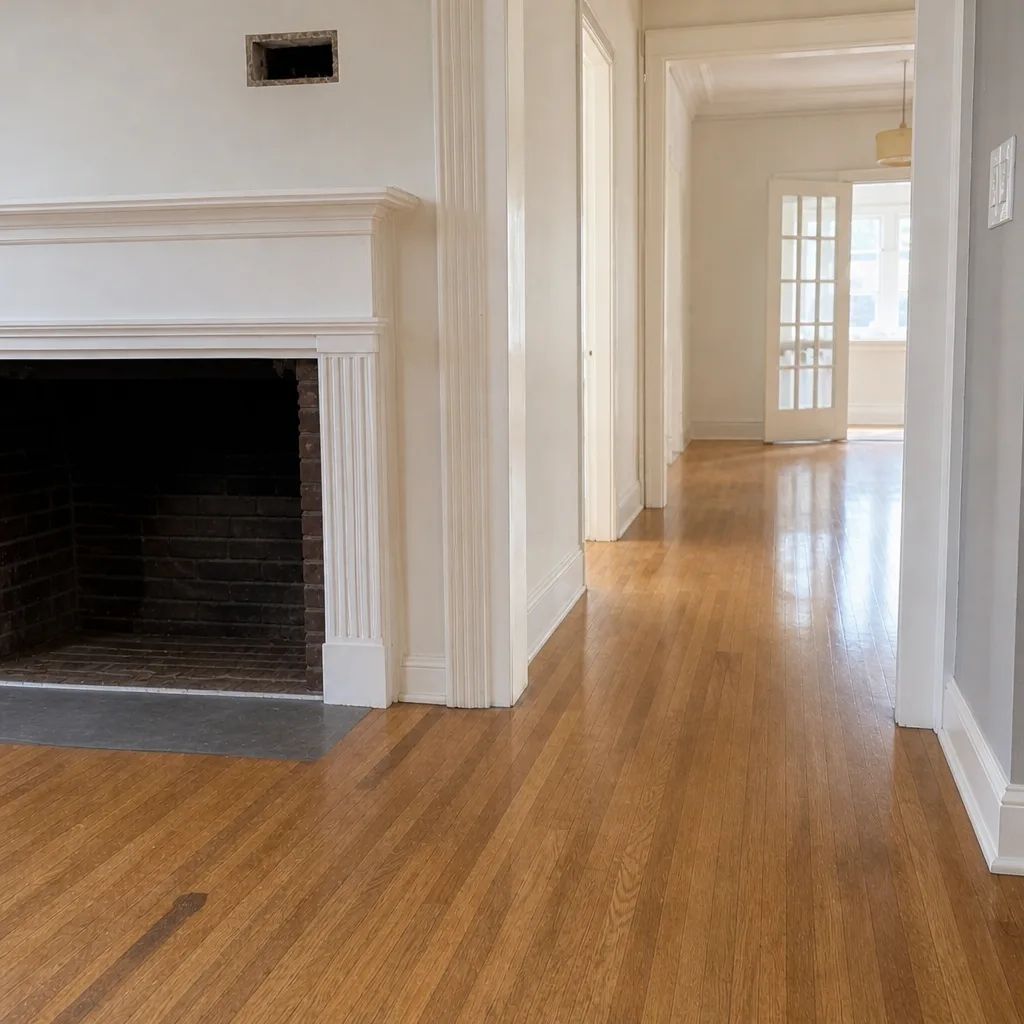 After
When to Call a Professional
Some signals mean the shop vac has done everything it can, and it’s time for a real cleaning. Visible dust streaks around supplies or returns, a musty odor through the registers, allergy symptoms that get worse when the system runs, or a recent renovation that put drywall dust into the return side are all reasons to call. So is a dryer that takes much longer than it used to, or a vent cap that looks clogged from the outside. And if you don’t know the last time the system was cleaned, professional assessment is the honest next step. Ridgewood Air Duct Cleaning offers free estimates in Ridgewood and covers the whole system, from supply and return ducts through the air handler, plus dryer vent cleaning, HVAC cleaning, duct repair and sealing, and air quality sanitizing. Call (866) 443-1814. We answer 24/7. Fast dispatch from 7am to 7pm, Sunday through Friday.
Frequently Asked Questions
A shop vac can reach the register face and the first foot or so of the register boot, but it cannot create the negative pressure required to clean the main trunk, the branch runs, or the air handler. The loosened debris has nowhere to go and typically settles further along the duct. If you’re going to buy a tool, buy a brush kit for register cleaning and leave the duct interior to a professional system.
Visible dust blowing out of registers, musty odors when the system runs, symptoms that worsen with heating or cooling season, recent renovation dust, and weak airflow at one or more registers are the most common signs. If you can’t remember the last time the system was cleaned, it’s worth getting assessed. Call (866) 443-1814 for a free estimate. Our technicians have up to 10 years of experience with systems like yours.
Yes, for the maintenance layer. Register cleaning, filter changes, dryer lint-trap maintenance, and exterior vent cap inspection are all safe and useful to handle yourself. They extend the interval between cleanings. What’s not worth attempting is the duct interior, the air handler, or the dryer vent run behind the wall, because consumer tools can’t reach those areas effectively or safely.
Rotary brush systems like Rotobrush, industrial negative-air machines like Nikro, and remediation-grade filtration such as Abatement Technologies equipment. Together these create the negative pressure, agitation, and capture that a full-system cleaning requires. There’s also the Guardsman material coverage for surface protection and the Honeywell and Aprilaire product lines for filtration and humidity control. None of that is available in a consumer format. Call (866) 443-1814 to see what a professional assessment covers.
Yes. The most common issues are torn flex duct liners, weakened taped connections, dislodged debris that settles downstream, and contamination spread from a return into previously clean branch runs. The air handler cabinet also contains the blower motor and control board, which are an electrical hazard if you probe them. If you’ve already tried a DIY cleaning and noticed a new airflow problem or a rattle, the sooner someone looks at it, the cheaper the correction.
It depends on the home. A typical interval is every few years if you replace filters on schedule and keep registers clean, and more often if you have pets, allergy sufferers in the household, or a recent renovation that sent construction dust into the return side. Homes with flex duct or basement runs often need more frequent attention because those configurations catch more dust. Call (866) 443-1814 for an assessment, and we’ll give you a written estimate that covers the actual system, not a number based on vent count.
The Bottom Line
The honest answer to DIY vs professional air duct cleaning is that they’re doing two different jobs. Register cleaning, filter changes, and dryer lint-trap maintenance belong in the homeowner’s hands, and doing them well genuinely extends the time between cleanings. Cleaning the duct interior, the air handler, and the dryer vent run require negative pressure and professional-grade agitation that no consumer tool replicates. Ridgewood homes tend to have tight duct routing and older systems, which makes the gap between consumer tools and professional equipment especially relevant. If you’ve been relying on a shop vac and a brush kit for a system that hasn’t been properly cleaned, the honest next step is a real assessment.
Call (866) 443-1814 for a free estimate. We answer 24/7. Fast dispatch from 7am to 7pm, Sunday through Friday. Professional-grade equipment, not shop-vac shortcuts.
Written by the team at Ridgewood Air Duct Cleaning.