
Last updated November 22, 2026
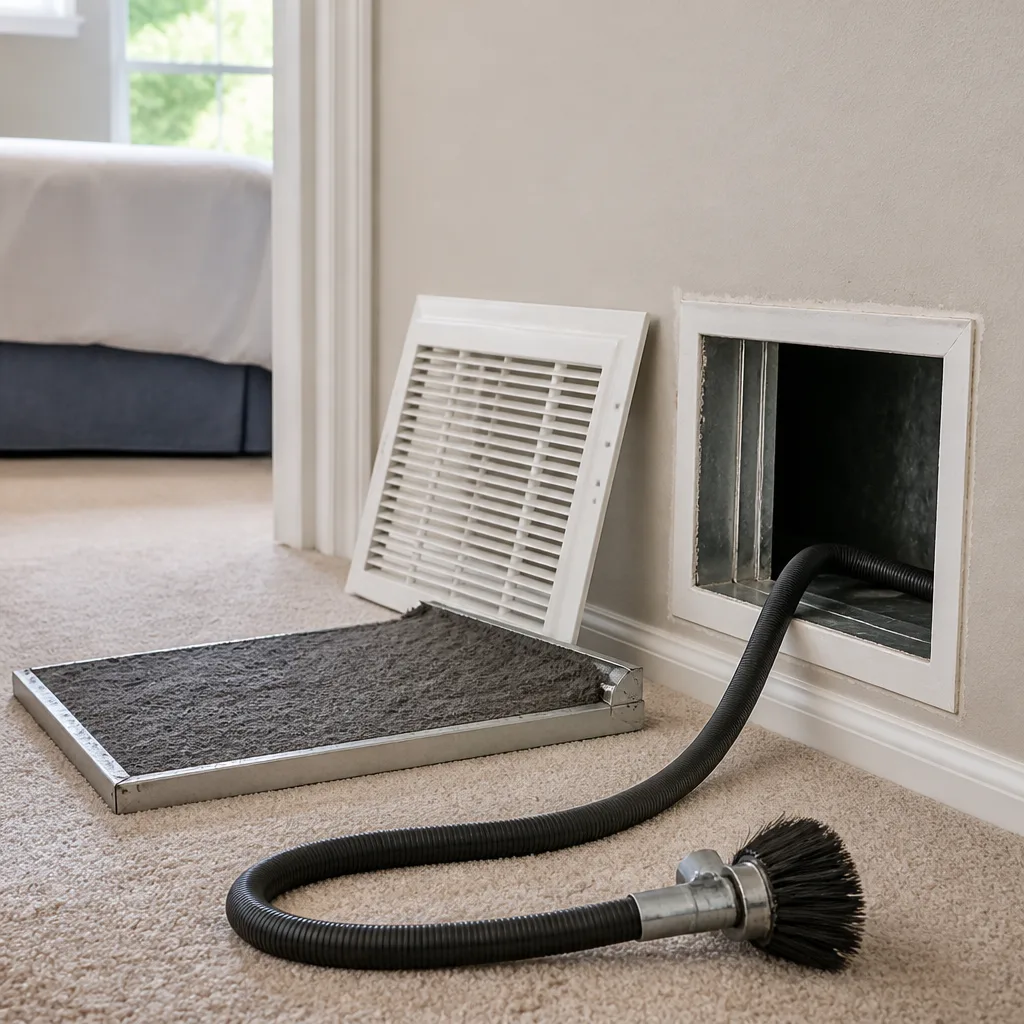 Whole-home duct cleaning
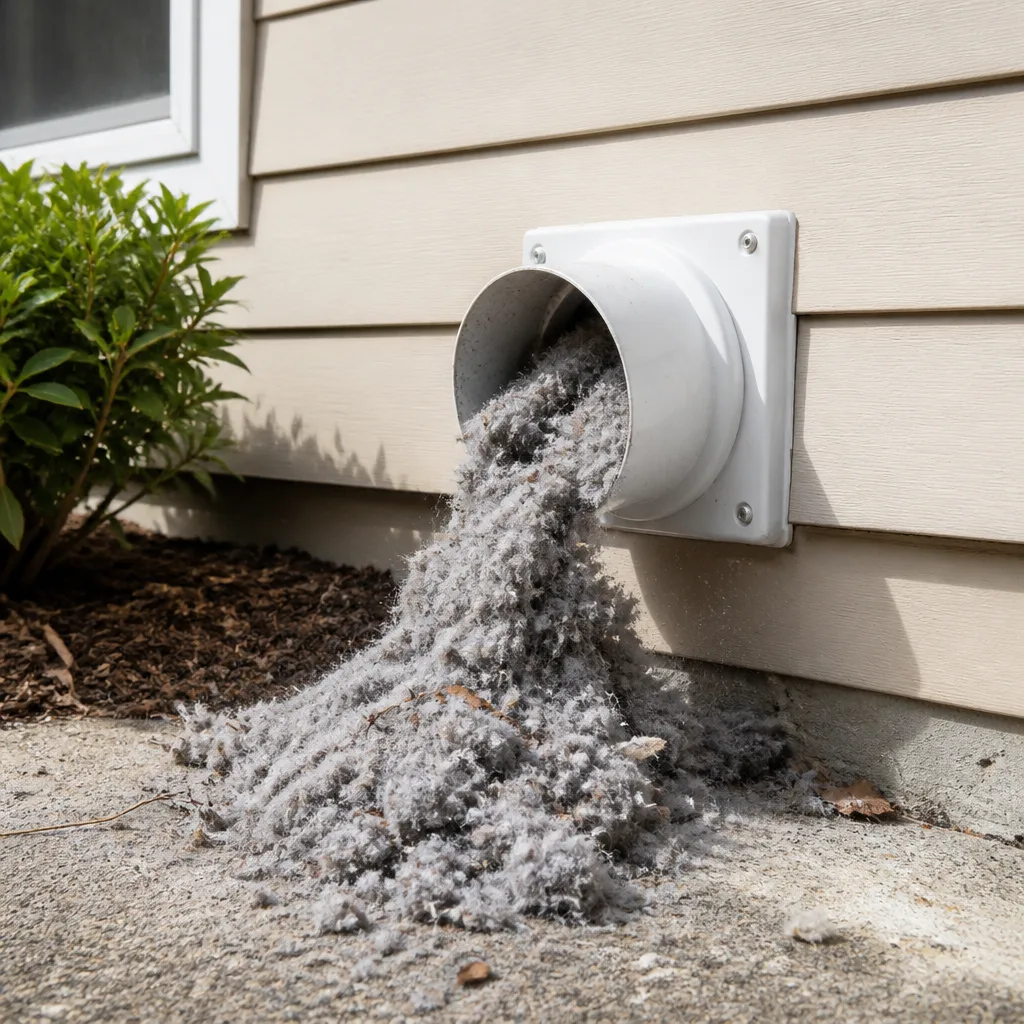 Dryer vent cleaning
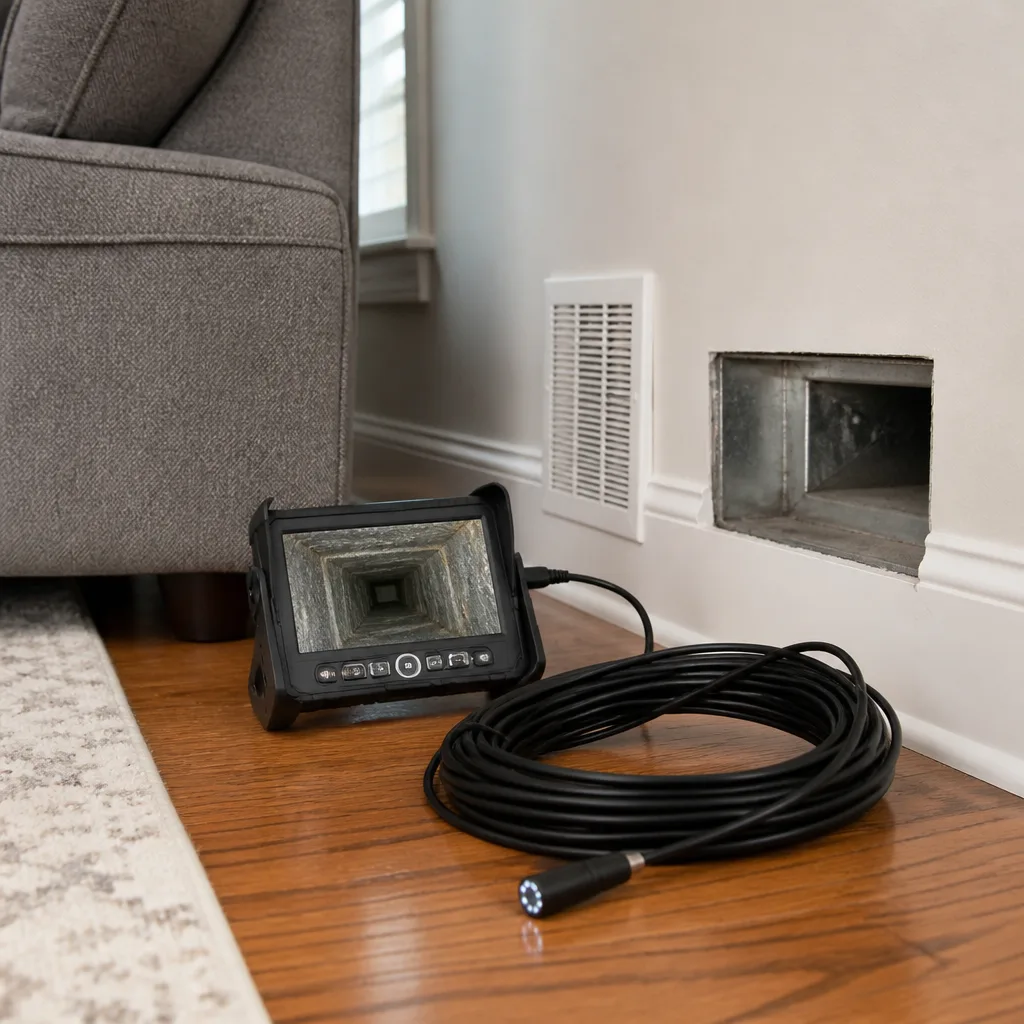 Camera inspection
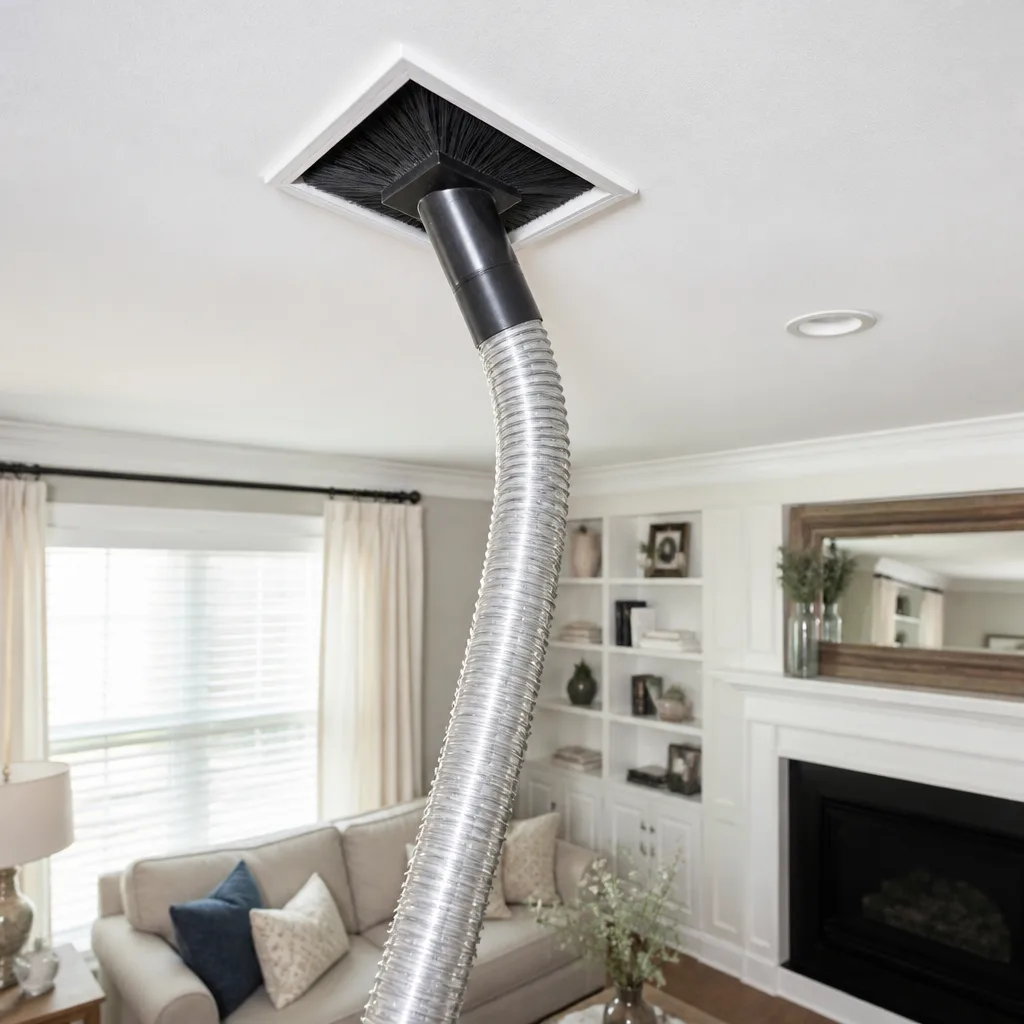 Sanitizing & deodorizing
Whole-system duct and dryer vent check with before-and-after photos - you see exactly what came out of your vents
That "$99 whole-house special" is a bait ad - the real number appears once they are in your hallway, or the "clean" is a shop-vac at the register. We photograph the inside of your ducts before and after instead.
Air Duct Cleaning Permits, Codes & Inspections in Ridgewood, NY: What You Need to Know
Here’s the part most contractors skip: cleaning your ducts doesn’t require a permit in New York City, but some of the work that happens around that cleaning does. Homeowners in Ridgewood get surprised by this halfway through a project, when a technician cuts into a duct run for access, replaces a section, or touches the air handler, and suddenly the job is no longer a maintenance task. It’s mechanical work under city jurisdiction. This guide walks through exactly where that line sits: what’s exempt, what triggers a filing with the NYC Department of Buildings, when a licensed HVAC contractor has to be on the job, and what your paperwork should look like when it’s done.
Quick Answer
Routine air duct cleaning in Ridgewood and across New York City does not require a DOB permit; it’s maintenance, not construction. But duct modification, replacement of duct sections, work on the air handler or coils, and any change to how the system moves air can fall under the NYC Mechanical Code and require a licensed contractor and a filed permit. Inspection documentation matters just as much, because a remediation report and a cleaning invoice prove very different things when you’re selling a property or filing a claim.
Styles & brands we work with
- Whole-home duct cleaning
- Dryer vent cleaning
- Camera inspection
- Sanitizing & deodorizing
Table of Contents
- What air duct work is permit-exempt in NYC?
- What triggers a NYC DOB Mechanical permit?
- When do you need a licensed HVAC contractor (Class A or B)?
- Local Law 97, ventilation standards, and multi-unit properties in Ridgewood
- Inspection documentation: remediation reports vs. cleaning invoices
- CO detectors and ventilation compliance in older Ridgewood buildings
- A step-by-step walkthrough of a compliant duct project
- Common mistakes to avoid
What air duct work is permit-exempt in NYC?
Cleaning is exempt. That’s the short answer, and it’s the one most Ridgewood homeowners need. Removing dust, debris, lint and biological buildup from the inside of supply and return ducts, cleaning the air handler, cleaning the blower and coil surfaces, and cleaning out a dryer vent are all maintenance activities. They don’t alter the building’s mechanical systems or change the occupied space, so they don’t require a Department of Buildings permit.
The exemption covers the cleaning itself and the equipment used to do it. Professional duct cleaning here relies on negative-air machines and rotary brush systems, tools like Rotobrush and Nikro equipment that pull debris out under containment rather than blowing it into the apartment. None of that touches the permit question.
What matters is how the technician gets to the dirt. Ducts in Ridgewood’s older housing stock are often short runs tucked behind plaster walls, in soffits, or above dropped ceilings in units converted from larger homes. Access sometimes means cutting a service opening, and that’s where a routine cleaning can edge into work the code cares about.
- Permit-exempt: mechanical cleaning of ducts, registers, grilles, coils, blower and air handler interior; dryer vent cleaning; sanitizing after cleaning; filter replacement.
- Usually permit-exempt: resealing existing access panels with the same materials, replacing a register or grille in the same opening, minor gasket replacement.
- Not automatically exempt: cutting new openings into duct runs, replacing a length of duct, changing duct routing, and anything involving the air handler’s electrical or refrigerant connections.
A good rule for any Ridgewood property manager: if the work changes the duct system’s shape, materials, or connections, ask the contractor directly whether it’s a cleaning task or a mechanical alteration. For a deeper look at what falls inside pure cleaning scope, see our page on air duct cleaning.
What triggers a NYC DOB Mechanical permit?
The line is modification. New York City’s Mechanical Code governs the installation, alteration, repair and replacement of mechanical systems, and ductwork that serves a heating, cooling or ventilation system is part of that picture. Cleaning removes what’s inside the duct. Altering the duct itself, or the equipment it connects to, moves the work into a different category.
In our experience around Ridgewood, the situations that catch people off guard tend to be the ones that start as a cleaning and grow once the ducts are open.
- Replacing a duct run. Crushed or disconnected flex duct behind a soffit gets found during cleaning. Replacing it is an alteration, not a cleaning.
- Cutting new access openings. Sometimes the only way to reach a run is a new opening through a wall or ceiling assembly. The opening itself, and how it’s framed and closed, can bring in code requirements.
- Sealing with rigid materials. Mastic and mesh on existing joints is standard cleaning-and-sealing work. Wrapping a run in new rigid duct board or sheet metal is a modification.
- Air handler, coil or blower replacement. Once a component of the equipment is swapped, not just cleaned, the mechanical code applies.
- Changing system capacity or routing. Extending a run to a new room, adding a return, or rebalancing with new dampers.
None of that makes the work wrong. It just means the job needs the right paperwork and, usually, a licensed contractor. If your duct project turns into a repair, our team handles duct repair and sealing as a native part of the visit, but we’re clear with you about which parts of the job sit inside cleaning scope and which don’t.
When do you need a licensed HVAC contractor (Class A or B)?
New York City licenses HVAC work through specific classes, and the class determines what the contractor is allowed to do. For duct and mechanical work, the distinction matters to Ridgewood homeowners because a cleaning specialist and a licensed mechanical contractor are not the same thing, and only one of them can sign off on certain jobs.
Broadly, the license classes split along the type of equipment and the size of the system. A contractor licensed for one class isn’t automatically cleared for work that falls under another. When your project crosses from cleaning into alteration, you want the contractor holding the license that covers the alteration, and you want the permit filed under that license.
- A cleaning specialist can operate independently for inspection, cleaning, sanitizing, filter service, and resealing existing access points using the same materials.
- A licensed contractor is required when the work involves installing or altering duct runs, replacing mechanical equipment, or any modification the Mechanical Code treats as an alteration.
- Ask for the license class in writing before the job begins. A contractor who can’t tell you which class they hold, and what it covers, is telling you something.
We handle the cleaning side of a Ridgewood project in-house, with professional-grade containment equipment and filtration from Abatement Technologies for jobs involving mold, allergen load or post-renovation dust. When a cleaning scope turns into mechanical work, the licensed contractor who files that permit puts their name on the inspection. That’s the right split, and we tell customers so up front rather than after the fact.
Local Law 97, ventilation standards, and multi-unit properties in Ridgewood
Ridgewood sits at a crossroads in the housing stock. You have prewar two- and three-family houses on streets like Woodward Avenue and Cornelia Street, and you have larger multi-unit buildings closer to Fresh Pond Road and along Myrtle Avenue. That spread changes how ventilation rules apply to a property owner, and Local Law 97 has made building systems a more visible topic for owners of the larger buildings.
Local Law 97 sets carbon-emission limits for larger buildings in New York City. It doesn’t regulate air duct cleaning as a practice, and a cleaning job doesn’t create a compliance obligation on its own. What it does is push building owners to look harder at how their mechanical systems perform, because a forced-air system that’s leaking air through failed duct connections or running with a fouled coil burns more energy than it should. Duct repair and sealing, and clean coils and blowers, are part of getting a building’s HVAC to run the way the equipment was designed to.
Ventilation requirements add a second layer. Buildings with shared corridors, bathrooms and kitchens rely on mechanical exhaust to move air where it needs to go, and a blocked or disconnected exhaust duct quietly defeats that. For landlords and property managers in Ridgewood, the practical takeaway is this:
- Document system condition. A written assessment of duct condition and airflow is useful evidence that you’re maintaining the building’s systems.
- Fix leakage, not just dirt. Sealing failed duct connections lowers the energy the system wastes and improves the ventilation you’re already paying for.
- Keep records per unit. In a two- or three-family Ridgewood house, a cleaning record for each unit’s system helps if a tenant raises an air quality complaint.
- Ask before assuming. Local Law 97 thresholds and ventilation requirements are specific, so confirm how they apply to your building with the city rather than relying on a contractor’s summary.
Inspection documentation: remediation reports vs. cleaning invoices
Two documents come out of duct work, and they aren’t interchangeable. A cleaning invoice tells you what was done and what it cost. A remediation or inspection report tells you what condition the system was in before and after, with evidence: photos of duct interiors, before-and-after images of the same runs, a description of contaminants found, and notes on any leaks or damage observed. If you’re selling a Ridgewood property or filing an insurance claim, the report is what the other party actually needs.
What a cleaning invoice should show:
- The systems covered (supply, return, air handler, dryer vent)
- The equipment used
- The agreed flat price for the system, itemized by component
- Any repairs or sealing performed, and whether they fall inside cleaning scope or required a licensed contractor
What a remediation-grade report should add:
- Before-and-after photographs of your own ducts, identified by location
- Condition notes on duct integrity, connections, insulation and access points
- Findings of moisture, mold-like growth, pest activity or debris type
- Recommended follow-up, separated into what a cleaning specialist can do and what needs a licensed mechanical contractor
Before-and-after photos of your own ducts are the simplest check on whether the work was actually done. Some companies show a stock photo. Ask for your duct, your run, your photo. That’s a difference we take seriously, and it’s why we photograph the work rather than describing it.
CO detectors and ventilation compliance in older Ridgewood buildings
Duct work in older Ridgewood buildings often surfaces ventilation issues that have nothing to do with dust. A gas furnace or boiler sharing space with a forced-air system, a bathroom fan ducted into the same chase as a flue, a disconnected exhaust run in a basement: these show up when someone is actually looking at the duct system. Carbon monoxide is the concern that deserves the most care.
New York City requires carbon monoxide alarms in residential units where a fuel-burning appliance or attached garage is present, and the alarm has to be in working order. Duct cleaning doesn’t create a CO risk, but a technician inspecting the mechanicals around a furnace can spot the conditions that do: backdrafting at the flue, corrosion on the heat exchanger, blocked combustion air, or a return duct pulling combustion gases into the living space.
- Confirm CO alarms are in place and working in every unit before and after mechanical work.
- Check exhaust duct connections at bathroom and kitchen fans. A duct that’s slipped off its boot is moving moisture into the structure instead of outside.
- Look at the furnace flue where it passes near duct runs. A flue in contact with or venting into a return is a serious problem, not a cleaning one.
- Never seal around a combustion air opening to “stop a draft.” That opening keeps the appliance safe to run.
Combustion appliances, gas piping and flues are dangerous to work on. We flag what we see and hand it to a licensed professional; we don’t adjust gas equipment, and no one should try to. If your CO alarm has gone off, get out and call your utility or 911 before anything else.
A step-by-step walkthrough of a compliant duct project
Here’s how a duct project in Ridgewood should go if the permit and inspection questions are being handled properly. Not every job needs every step, but knowing the sequence tells you when someone is skipping something.
- Assessment first. A technician inspects the system: supply and return runs, air handler, coil, and any visible duct damage or disconnection. This determines whether the job is a cleaning or something larger.
- Scope written down. You get a written scope separating cleaning work from any alteration, with a flat price per system agreed before anyone starts.
- Permit decision. If the scope includes duct modification or equipment replacement, the contractor confirms the filing requirement with the NYC Department of Buildings and tells you which license class covers the work.
- Containment and cleaning. Negative-air equipment and rotary brush systems clean the system under containment. Before-and-after photos are taken during this step.
- Repair and sealing. Failed joints, disconnected boots and damaged sections are sealed or repaired as part of the scope. Any alteration outside cleaning scope goes to the licensed contractor.
- Inspection. Where a permit was filed, the DOB inspects the alteration. Cleaning work itself doesn’t generate a DOB inspection, but the report documenting it should still exist.
- Documentation delivered. You receive the invoice, the condition report, and the photos. Keep the report with the property records.
Our team’s HVAC cleaning work follows the same structure, because a coil and blower cleaned without assessing the duct connections around them is only half the job. The point of the sequence is that nothing gets discovered mid-project that shouldn’t have been identified at step one.
Common Mistakes to Avoid
- Assuming “cleaning” covers a duct replacement. If a technician finds a crushed run and replaces it without asking about the permit question, you may end up with an unpermitted alteration in your building.
- Skipping the license-class question. Ask any contractor which class they hold and what it lets them do. A vague answer on a job that involves modification is a warning sign.
- Accepting a before-and-after photo that isn’t yours. Stock images don’t prove anything about your Ridgewood apartment’s ducts. Ask for photos of your own runs.
- Treating a cleaning invoice as inspection documentation. If you’re selling a two-family house near Myrtle Avenue or filing an insurance claim, you need the condition report, not just the receipt.
- Ignoring CO alarms during mechanical work. Confirm alarms work before and after, and never let anyone seal a combustion air opening to stop a draft.
- Letting a dryer vent slide. Dryer vent cleaning is a fire-safety item, and lint buildup in a vent run is one of the more common issues uncovered during a full-system visit. See our page on dryer vent cleaning.
- Paying per vent. Per-vent pricing makes the final number unpredictable. Whole-system pricing agreed in writing before the work starts is what you want.
See the difference
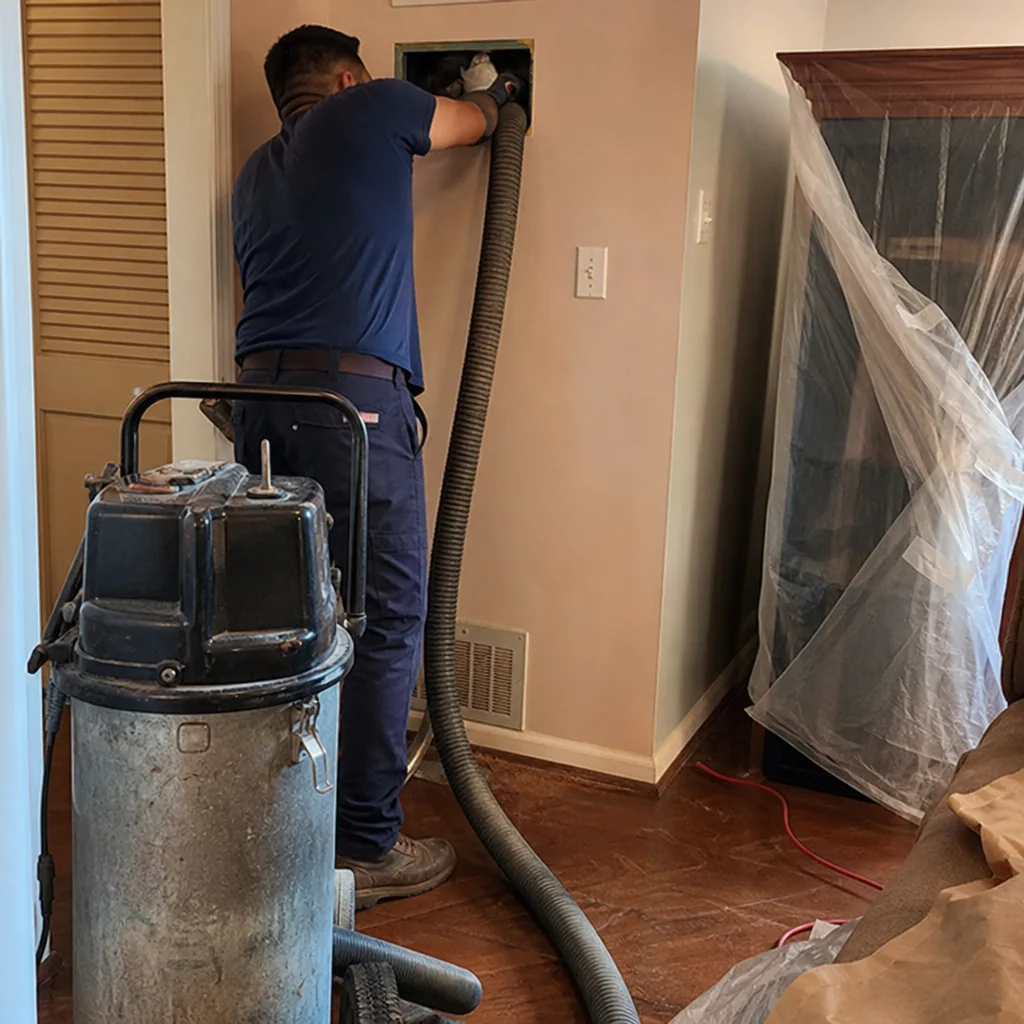 Before
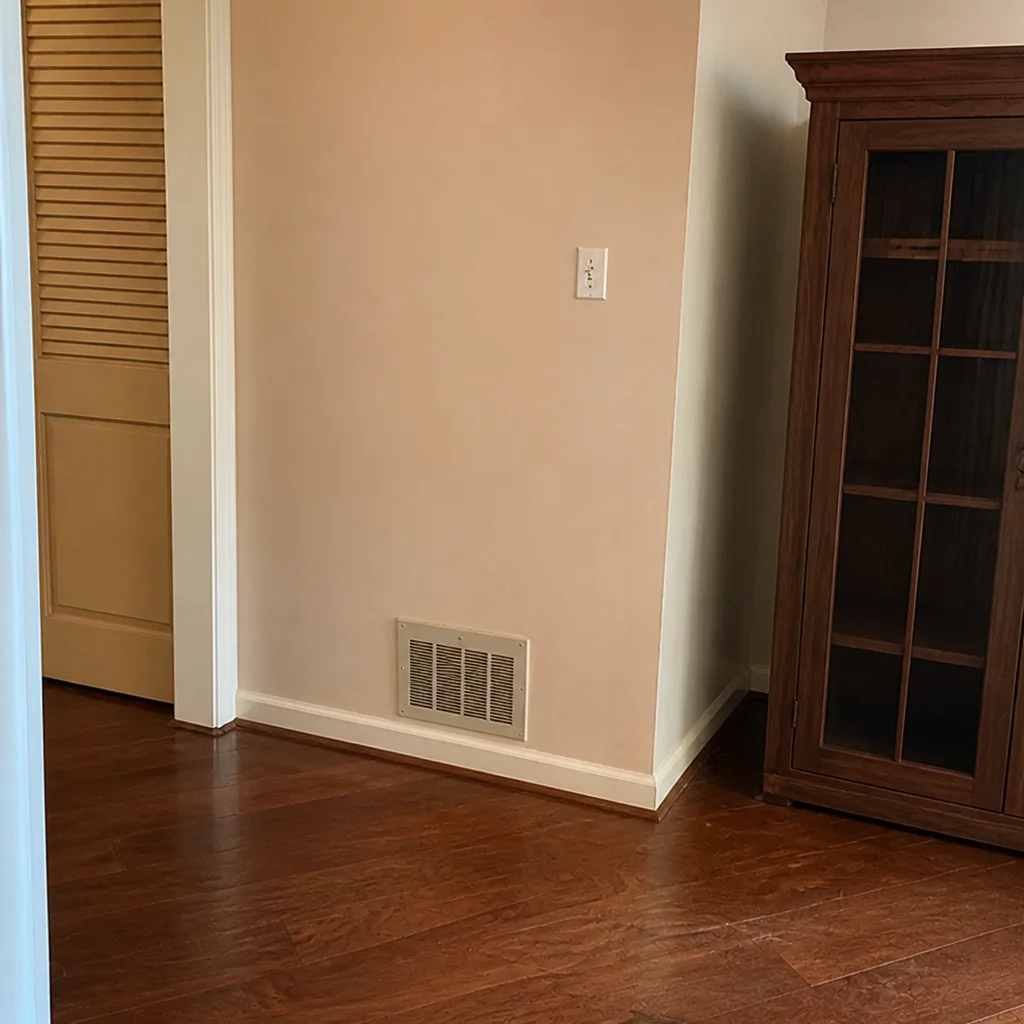 After
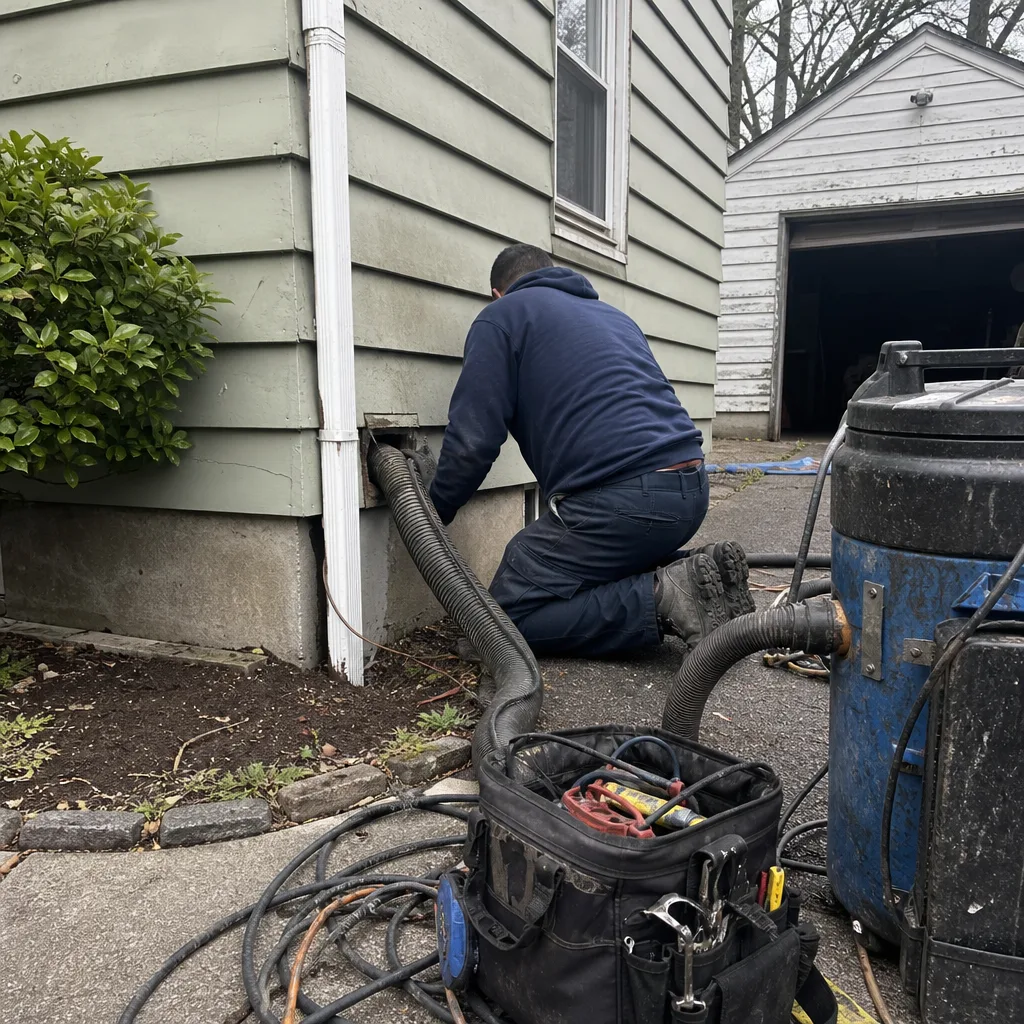 Before
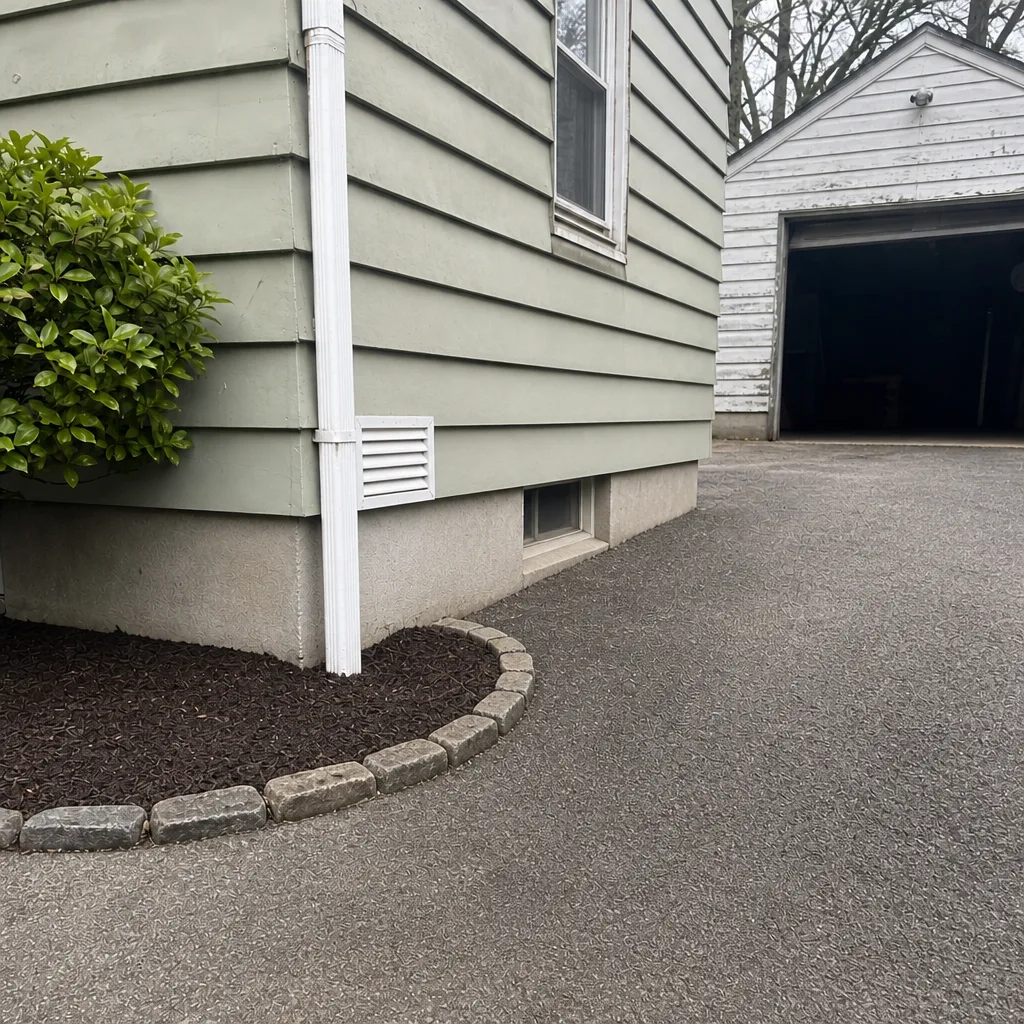 After
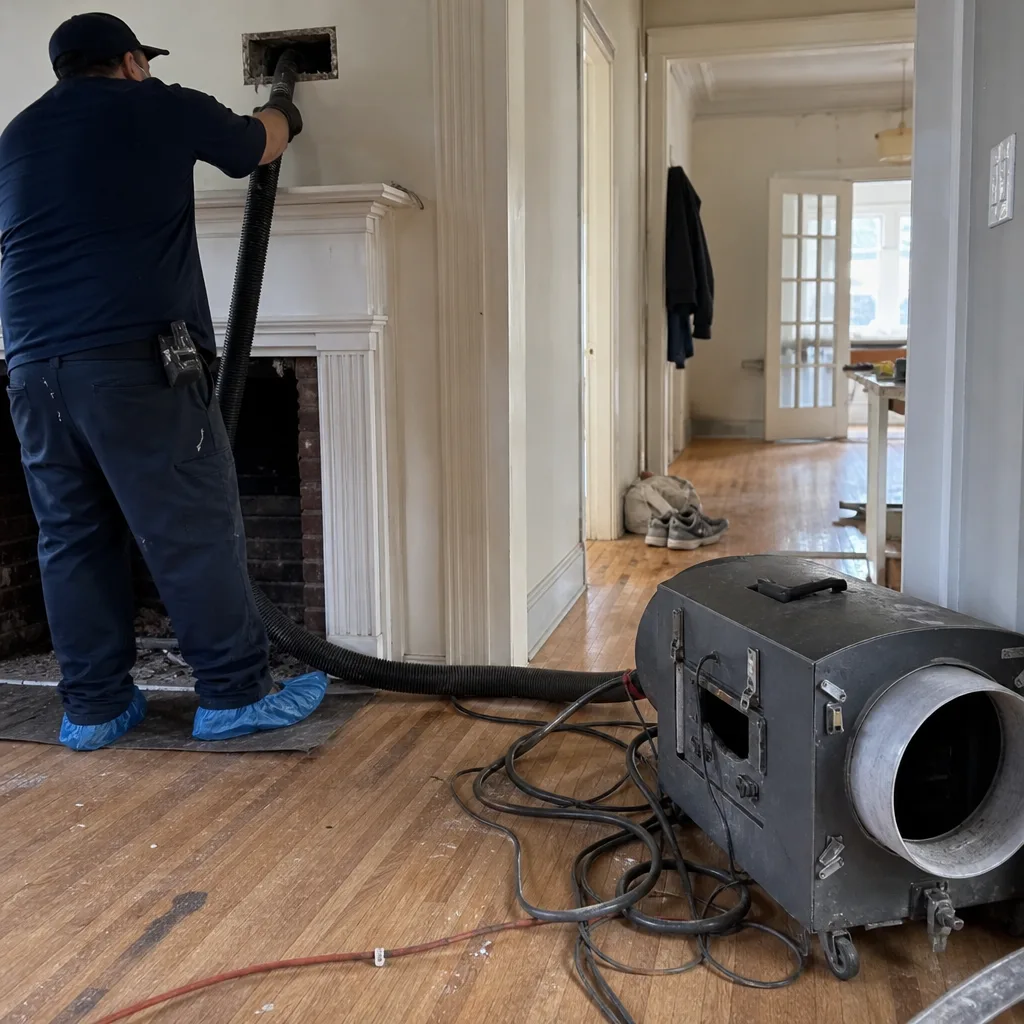 Before
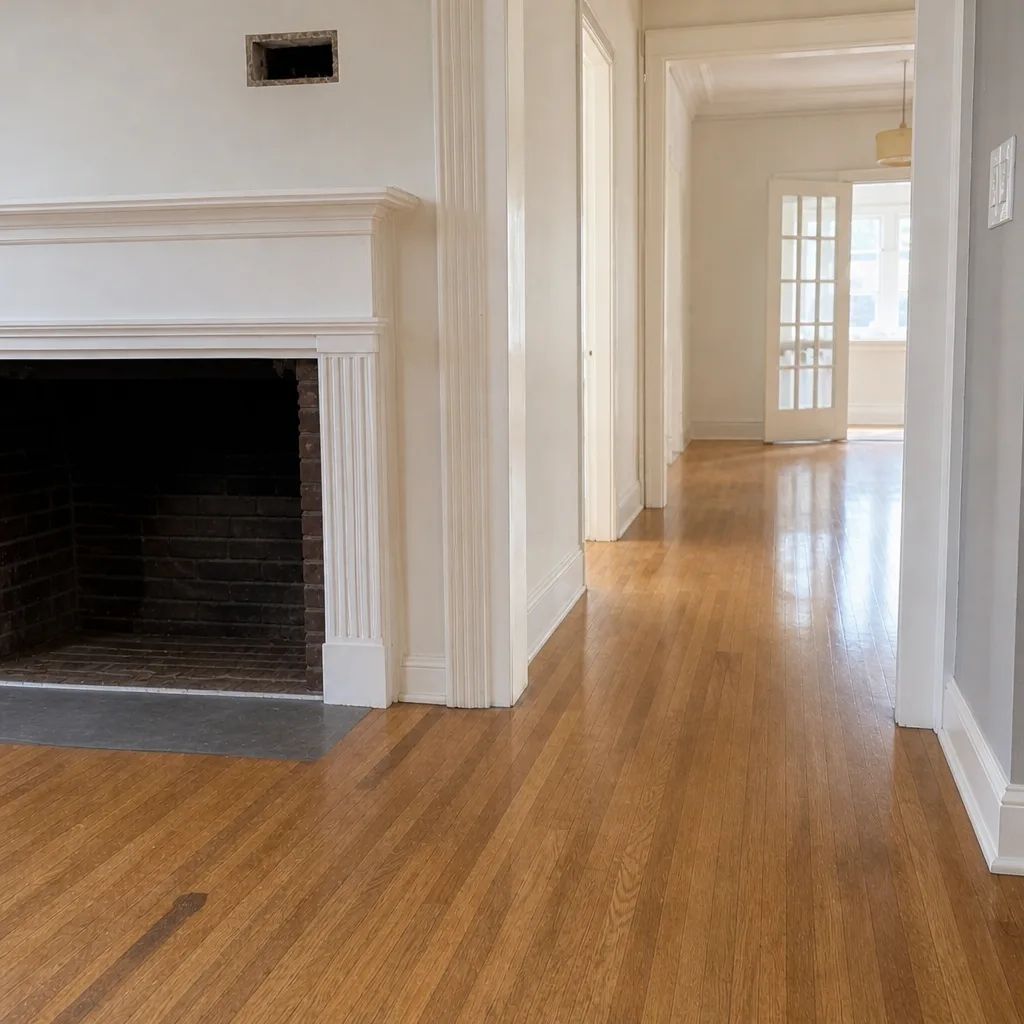 After
When to Call a Professional
Call a professional when you notice musty odors coming from registers, visible dust settling hours after cleaning, allergy symptoms that get worse indoors, or an HVAC system that’s running longer than it used to. Call when you’re buying or selling a Ridgewood property and want a documented condition report on the duct system. Call if you’ve had recent renovation work and want post-construction dust pulled out of the system before it settles into the coil. And call if a technician anywhere in the process tells you a duct needs replacement, because that’s the point at which the permit and license questions need answering before work proceeds, not after.
Dangerous conditions get a different response. If you smell gas, if a CO alarm sounds, or if you see scorching around a furnace, get out and contact your utility or 911. Electrical and gas work is not a duct cleaning task and shouldn’t be treated as one.
Ridgewood Air Duct Cleaning offers free estimates in Ridgewood. Call (866) 443-1814. We answer 24/7, with fast dispatch from 7am to 7pm, Sunday through Friday.
Frequently Asked Questions
No. Routine air duct cleaning in Ridgewood and across New York City does not require a permit, because it’s maintenance rather than construction. A permit becomes a factor only when the work shifts into duct modification, replacement of duct sections, or work on the air handler or coils. If your job stays inside cleaning scope, no filing is needed.
The trigger is a change to the duct system itself or the equipment it connects to, not the cleaning. Cutting new access openings, replacing a duct length, altering routing, or swapping the air handler or coil are the kinds of work that fall under NYC Mechanical Code jurisdiction. Ask your contractor directly whether the scope is cleaning or alteration, and get the answer in writing before work starts. Call (866) 443-1814 if you’re not sure which side of the line your job sits on; estimates are free.
Not directly. Local Law 97 sets carbon-emission limits for larger New York City buildings, and a duct cleaning doesn’t create or satisfy a compliance obligation by itself. What helps is fixing duct leakage and keeping coils and blowers clean so the system runs efficiently, and documenting that maintenance in your building records. Confirm how the law applies to your specific building with the city.
An invoice records what was done and what it cost. A remediation report documents the system’s condition before and after, with photos of your ducts, contaminant findings, and notes on damage or leakage. If you’re selling a Ridgewood property or filing an insurance claim, the report is what’s actually useful. Ask for both.
Sometimes, and it depends on the scope. Sealing existing joints and repairing connections as part of a cleaning visit is standard. Work that alters duct routing, replaces duct runs, or touches mechanical equipment requires a licensed contractor holding the right class for that work. Our team handles cleaning, sanitizing and duct sealing, and is direct with you when a repair needs the licensed professional who files the permit.
Usually because the quote covers less: a quick pass with consumer-grade equipment, no containment, no air handler or coil cleaning, and per-vent pricing that grows as the job goes. The gap between a teaser price and the final invoice is the reason per-system pricing agreed in writing before work starts matters. We give you one flat price per system based on the actual scope. Call (866) 443-1814 for an exact quote; estimates are free.
The Bottom Line
Cleaning your ducts in Ridgewood doesn’t require a permit, but the work that surrounds it sometimes does, and the difference sits precisely at the moment a cleaning becomes a modification. Keep four things straight: pure cleaning is exempt, duct alteration may need a DOB filing, the alteration needs a contractor with the right license class, and the documentation you keep matters as much as the work itself. Ask the scope question before anyone starts. Confirm your CO alarms. Keep the report. And treat a duct repair found mid-project as a signal to slow down and check the paperwork, which is exactly what it is.
Ridgewood Air Duct Cleaning provides residential and commercial air duct cleaning, dryer vent cleaning, HVAC cleaning, duct repair and sealing, and air quality sanitizing. Our technicians have up to 10 years of experience, and we use professional-grade equipment including Rotobrush, Nikro, Abatement Technologies, Honeywell and Aprilaire systems. One flat price per system, agreed before work starts, with before-and-after photos of your own ducts. The local pro we connect you with is licensed and insured as their state requires.
Call (866) 443-1814 for a free estimate. We answer 24/7. Fast dispatch from 7am to 7pm, Sunday through Friday. You can also start with our Ridgewood Air Duct Cleaning overview to see the full scope of what we handle.
Written by the team at Ridgewood Air Duct Cleaning.